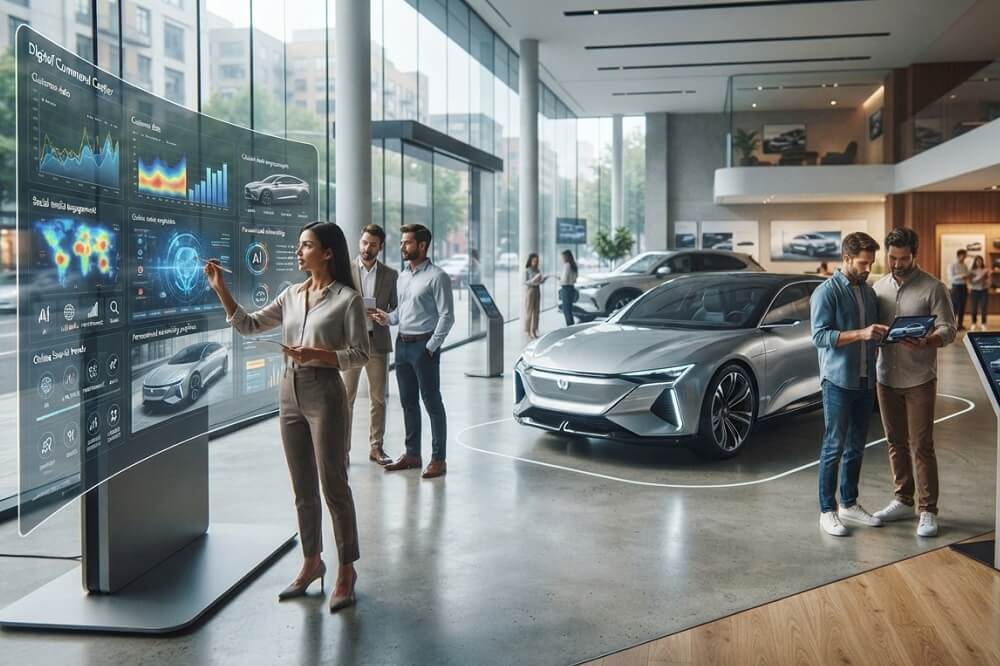
The automotive industry has always been closely connected to marketing. From iconic television commercials and glossy magazine advertisements to digital campaigns, social media and influencer marketing, car manufacturers and dealerships have continuously adapted to changing consumer habits. But automotive marketing is now undergoing one of its most significant transformations.
The modern car buyer no longer follows a simple path from seeing an advertisement to visiting a dealership and making a purchase. Consumers research models online, compare prices, watch reviews, read forums, explore social media, use configurators, check financing options and increasingly expect personalised digital experiences before they ever speak to a salesperson. At the same time, artificial intelligence, electric vehicles, connected cars and increasingly sophisticated digital advertising platforms are changing what automotive brands can do, and what consumers expect from them.
The Car-Buying Journey Has Become Digital
One of the biggest changes in automotive marketing is the transformation of the customer journey. A potential buyer can now spend weeks researching a vehicle without ever contacting a dealership. They may begin with a Google search such as “best family SUV 2026” and move through dozens of websites, YouTube videos, comparison platforms, Reddit discussions, manufacturer websites and social media accounts before deciding which models deserve further consideration.
This means that automotive marketing is no longer simply about promoting a particular vehicle. It is about being visible throughout the entire research process. A manufacturer or dealership that appears only when a consumer searches for a specific model is potentially missing much of the journey that happens before that search.
This creates an important opportunity for content marketing and SEO. Articles comparing vehicle categories, explanations of financing, maintenance guides, fuel-cost comparisons, EV charging information and practical buying guides can attract consumers long before they have decided what car they want.
Consumers Are Doing More Research Before Buying
The amount of information available to consumers has fundamentally changed the balance between buyers and sellers. A salesperson used to be one of the primary sources of information about a vehicle. Today, consumers can arrive at a dealership knowing the specifications, price ranges, competing models and even common problems associated with a particular vehicle.
This has created a more informed customer. For marketers, it means that simply publishing promotional claims such as “premium quality” or “best in class” is increasingly insufficient. Consumers want evidence. They want demonstrations, comparisons, reviews, real-world consumption figures, ownership costs and authentic experiences. This is one reason video has become particularly important in automotive marketing.
Video Is Becoming a Core Automotive Marketing Format
Cars are inherently visual products. Consumers want to see how a vehicle looks from different angles, what the interior feels like, how much space it offers and how it behaves on the road. Consequently, platforms such as YouTube, Instagram and TikTok have become important parts of the automotive discovery process.
Short-form video is particularly useful for generating initial attention. A 20-second video showing a new vehicle feature can generate awareness, while a longer YouTube review can help a consumer evaluate the vehicle during the consideration stage. The two formats serve different purposes. This distinction is increasingly important for marketers. A short video does not necessarily need to sell a car. It may simply need to make someone stop scrolling. A longer review, comparison or test drive can then provide the information necessary to move that person further down the purchasing funnel.
Artificial Intelligence Is Changing Automotive Marketing
Artificial intelligence is becoming one of the most important technologies in marketing. In automotive marketing, its applications go far beyond generating advertising copy. AI can help brands analyse customer behaviour, identify patterns in search data, personalise communication, generate creative variations, automate customer-service interactions and improve campaign targeting.
Generative AI is also changing the production process. Marketing teams can now create multiple versions of headlines, advertisements, product descriptions, social media content and email campaigns in a fraction of the time previously required. But there is an important distinction between using AI to produce more content and using AI to produce better marketing. The automotive brands that benefit most from AI are likely to be those that combine automation with real data, human expertise and a strong understanding of their customers. Producing hundreds of generic AI-generated articles does not automatically create a successful content strategy.
Search Is Changing, But It Is Not Disappearing
Search marketing is also entering a new phase. For years, automotive SEO focused heavily on ranking for searches such as “BMW X5 price,” “Toyota Corolla hybrid,” “used cars Belgrade” or “best electric SUV.” Those searches remain valuable, but the way people search is changing. Consumers increasingly ask complete questions rather than entering short keyword combinations. They may ask an AI assistant: “Which hybrid SUV is best for a family of four that drives mostly in the city?”
This creates a new challenge for automotive marketers. Brands need to create content that answers questions rather than simply targeting keywords. The objective is increasingly to become a useful source of information across multiple search environments, including traditional search engines, AI-generated answers, video platforms and social networks.
First-Party Data Is Becoming More Valuable
Privacy changes and restrictions on third-party tracking are making first-party data increasingly important. Automotive companies have access to valuable information through website interactions, test-drive requests, configurators, financing inquiries, service bookings, newsletters and customer accounts.
When used responsibly, this information can help marketers understand where a consumer is in the purchasing journey. For example, someone who has configured a vehicle online represents a very different marketing opportunity from someone who has only read an article about electric cars. This enables more relevant communication. Instead of sending the same advertisement to everyone, marketers can develop different messages for people who are researching, comparing, requesting an offer or preparing to purchase.
Electric Vehicles Are Creating a New Marketing Challenge
The growth of electric vehicles is not simply changing the products that automotive companies sell. It is changing the questions consumers ask. Traditional automotive advertising often focused on horsepower, acceleration, design and brand prestige. EV consumers may also want to know how far the car can travel on a single charge, how long charging takes, where they can charge it, how much charging costs, what happens in winter, how long the battery will last, what the total cost of ownership is and how battery degradation affects resale value.
This creates a major content opportunity. Automotive brands that educate consumers can reduce uncertainty around new technologies. In other words, EV marketing is partly education marketing. The company is not simply selling a vehicle. It is often explaining a new way of using a vehicle.
The Rise of Automotive Influencers
Another important trend is the growing influence of independent creators. Car reviewers, mechanics, automotive journalists and creators on YouTube, Instagram and TikTok can have significant influence over consumer perceptions. Their advantage is authenticity. A traditional advertisement tells consumers what a brand wants them to know. An independent creator can show what the vehicle actually looks like, sounds like and feels like.
This does not mean that influencer marketing should replace traditional advertising. Instead, automotive brands increasingly have an opportunity to combine the two. A paid campaign can generate reach, while independent reviews and creator content can provide additional credibility and detailed information.
Personalisation Is Becoming the New Standard
Consumers are becoming accustomed to personalised digital experiences in other industries. They receive product recommendations from e-commerce platforms, personalised playlists from music services and customised content from social networks. They increasingly expect similar experiences when researching expensive products such as cars.
Imagine two visitors arriving at the same automotive website. One is researching compact city cars. The other is comparing premium electric SUVs. Showing exactly the same homepage, banners and content to both visitors is unlikely to be the most effective experience. Modern automotive marketing can use behavioural signals to create more relevant journeys. The challenge is to make personalisation useful rather than intrusive.
Dealership Marketing Is Changing Too
Digital transformation is not limited to manufacturers. Dealerships are also changing the way they generate leads. Google Ads, local SEO, Google Business Profile optimisation, social media, remarketing, video advertising and CRM systems are increasingly connected.
A dealership may have excellent vehicles in stock, but if potential customers cannot find the dealership online, those vehicles effectively become invisible to a significant part of the market. Local search is particularly important. Queries such as “car dealer near me,” “used cars in Belgrade” or “Toyota dealer near me” indicate a much stronger local intent than a generic search for a vehicle model. This makes the combination of local SEO, paid search and strong inventory pages particularly important.
The Importance of Reviews
Reviews have become another critical component of automotive marketing. Consumers are not only evaluating vehicles. They are evaluating dealerships, service centres and the overall ownership experience. A customer may choose between two dealerships offering similar vehicles based on their perception of service quality.
That makes review management part of marketing, not simply customer service. Positive reviews can support trust, while responses to negative reviews can demonstrate how a company handles problems. The lesson is simple: the customer experience has become part of the advertising.
Automotive Marketing Is Becoming More Measurable
One of the biggest advantages of digital marketing is the ability to measure behaviour. Automotive marketers can analyse website traffic, search queries, cost per lead, test-drive requests, vehicle configurator usage, phone calls, form submissions, financing inquiries, dealer visits, video engagement, customer acquisition costs, conversion rates and return on advertising spend.
But there is a growing problem: too much attention can be placed on superficial metrics. A campaign generating one million video views may look impressive. However, if those views generate no meaningful interest in the product, their business value may be limited. For automotive brands, the most important question is increasingly not “How many people saw our campaign?” but “What did people do after seeing it?”
The Future: From Campaigns to Continuous Customer Journeys
The traditional marketing model was based around campaigns. A company launched an advertising campaign, ran it for several weeks and then measured the results. Modern automotive marketing is increasingly continuous. A consumer may discover a brand on TikTok, watch a YouTube review, search Google for specifications, visit the manufacturer’s website, configure a vehicle, see a remarketing advertisement, read reviews and eventually book a test drive.
No single advertisement created the sale. The entire digital journey contributed to it. This is why automotive marketing teams increasingly need to think in terms of ecosystems rather than individual campaigns.
What the Numbers Tell Us
Several broader digital trends explain why this transformation matters. Global internet usage has surpassed 5.5 billion people, while social media user identities are measured in the billions. Video platforms have become major sources of product discovery and information, while AI-powered search is beginning to change how consumers find answers online.
At the same time, the automotive market itself is undergoing structural change. Global electric-vehicle sales have reached tens of millions of units annually, with China, Europe and the United States representing major EV markets. These numbers point toward the same conclusion: automotive marketing is becoming increasingly digital, visual, personalised and data-driven. The car remains a physical product, but much of the decision-making process now happens in a digital environment.
The New Automotive Marketing Formula
The automotive marketing model of the future is unlikely to be based on one channel. It will combine multiple disciplines. SEO to capture people researching vehicles. Paid search to capture high-intent demand. Social media to generate attention and brand discovery. Video to demonstrate products. Influencers and creators to provide independent perspectives. AI to analyse data and personalise experiences. CRM and first-party data to nurture potential customers. Local marketing to connect digital demand with physical dealerships. And perhaps most importantly, useful information to help consumers make increasingly complex purchasing decisions.
The brands that understand this shift will not simply advertise cars. They will build digital environments in which consumers can discover, research, compare, understand and eventually purchase them. The future of automotive marketing is therefore not about choosing between traditional advertising and digital marketing. It is about connecting every stage of the customer journey, from the first search to the first test drive and, ultimately, to long-term ownership.
The car may still be sold in a showroom, but the decision to buy it increasingly begins somewhere else.